
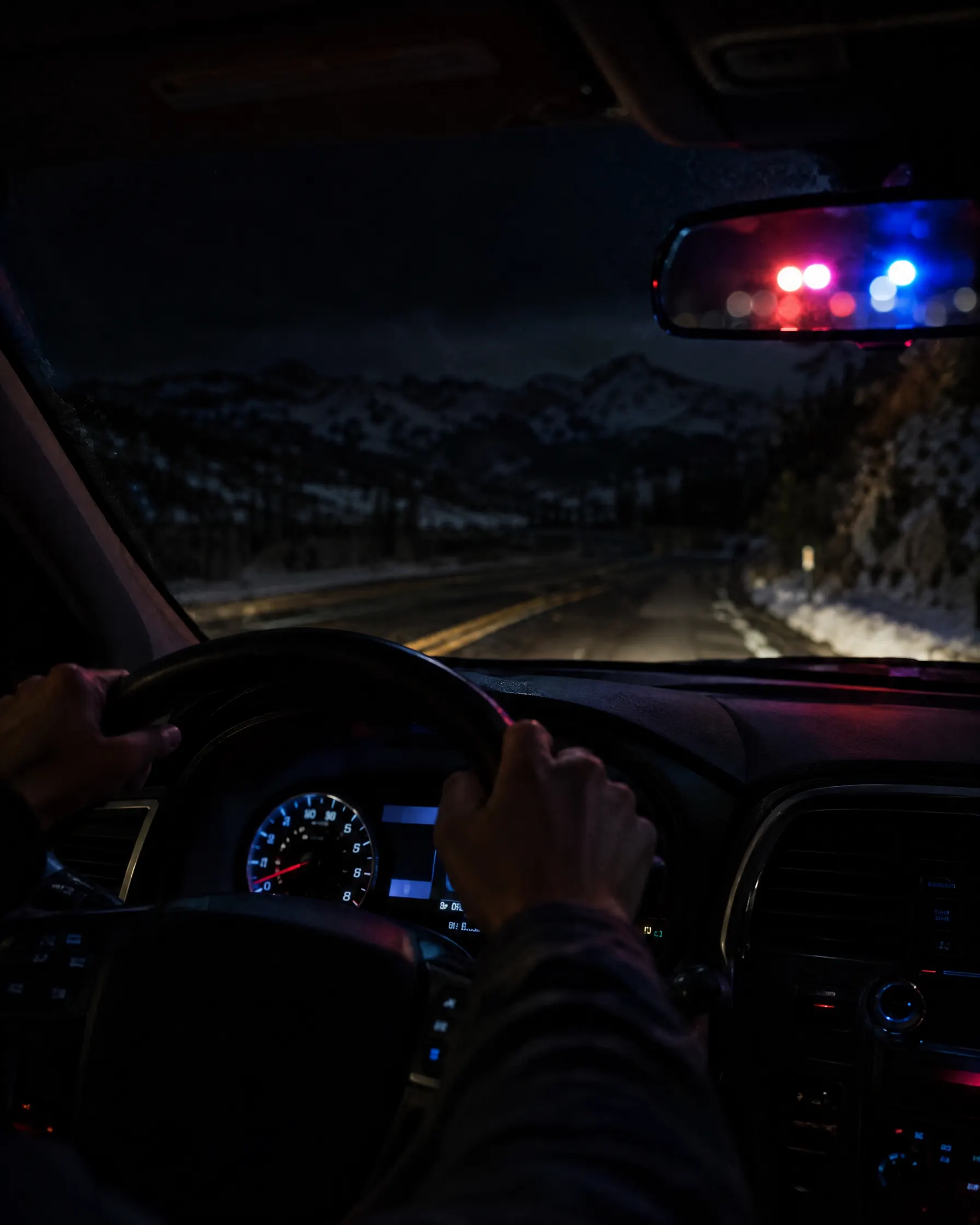
Pulled over on Halloween weekend: what you have to do at a DUI stop, and what you can decline
At a Colorado DUI stop you must hand over your license and follow lawful orders. Roadside sobriety tests and questions about drinking you may politely decline.
At a Colorado DUI stop, you have to pull over, hand over your license, registration and proof of insurance, and follow an officer's lawful orders, but you don't have to answer questions about your night or perform roadside sobriety maneuvers. Halloween weekend in Denver usually means house parties, bar crawls in costume and extra DUI patrols, so a lot of people get pulled over in the next few nights. Knowing where the line sits between what's required and what's optional helps you stay calm and avoid handing over evidence you never had to give.
| Moment in the stop | What you must do | What you may politely decline |
|---|---|---|
| Lights come on behind you | Signal, pull over safely and stop | Nothing at this stage |
| Officer at your window | Give your license, registration and proof of insurance | Questions about where you were, where you're going and what you drank |
| Asked to step out | Get out of the car when told to | Small talk and explanations |
| Roadside tests | Stay where the officer directs you | Walk-and-turn, one-leg stand, eye test and similar maneuvers |
| Handheld breath device | Answer clearly that you're declining, if you are | The portable screening breath test (for drivers 21 and older) |
| Officer asks to search the car | Not physically interfere | Giving consent to the search |
| After arrest | The express consent law requires a breath or blood test | Refusing is possible but triggers license penalties |
What you have to do when you're pulled over
Pull over as soon as it's safe, turn off the engine, and at night switch on the dome light. Keep your hands on the wheel until the officer asks for something. These steps aren't legal magic. They just lower the tension of a stop that's already tense for both sides.
Colorado drivers have to show a valid license when an officer asks for it, along with the vehicle's registration and proof of insurance. Tell the officer where the documents are before you reach for them, especially if they're in a glove box or a bag.
If the officer tells you to get out of the car, do it. Officers can order a driver out during a lawful traffic stop, and refusing that order creates a new problem without solving the old one.
Never lie, and never resist. Giving a false name, making up a story about your evening or pulling away from an officer can bring separate charges. You're allowed to stay quiet. You're not allowed to deceive.
What you can politely decline
Questions about where you were and what you drank
Officers usually open with something like "Have you had anything to drink tonight?" Whatever you say gets written down. "Just two beers" is one of the most common admissions in DUI reports. You can say, calmly, "I'd prefer not to answer questions, officer." You don't need to explain why. Keep handing over required documents and following lawful directions while you decline to talk about your night.
Roadside sobriety maneuvers
The walk-and-turn, the one-leg stand, following a pen with your eyes and similar exercises are voluntary in Colorado. Officers may not say so. They're often phrased as instructions rather than requests. These tests are hard to pass sober, in costume shoes, on a cold shoulder of the road with traffic going by. A simple "I'm going to decline the roadside tests" is enough. Declining won't necessarily stop an arrest, since the officer can rely on other observations, but it keeps you from adding to the evidence.
The portable breath test at the roadside
Some officers carry a small handheld breath device and ask you to blow into it before any arrest. For drivers 21 and older, Colorado treats this preliminary screening test as voluntary, and declining it is not the same as refusing the evidential test under the express consent law. The rules can differ for drivers under 21, so younger drivers should not assume the same answer applies.
A search of your car
If an officer asks, "Mind if I take a look inside?" you can say no. Say it once, clearly, and don't block or touch the officer if they search anyway. Officers sometimes have other legal grounds to search, and whether a search was lawful is something a lawyer can challenge later in court, not on the roadside.
The breath or blood test after an arrest is different
Once an officer arrests you for DUI with probable cause, Colorado's express consent law, C.R.S. 42-4-1301.1, comes into play. By driving in Colorado, you're treated as having agreed to a breath or blood test, generally to be completed within two hours of driving. In most situations you can choose between breath and blood.
You can physically refuse this test, but refusal has real consequences. The Colorado DMV can revoke your license for refusing, separate from anything that happens in the criminal case, and the prosecution can bring up the refusal in court. Whether taking or refusing the test makes more sense depends on facts that differ from case to case. The firm's page on refusing the breath or blood test in Colorado walks through how refusal plays out with the DMV and in court.
Asking for a lawyer still matters. After an arrest, saying "I want a lawyer and I'm not going to answer questions" protects you during any interview at the station. Say it once, then stop talking about the case.
Halloween details that can complicate a stop
Costumes add some odd wrinkles. If you're wearing a mask or face paint, take the mask off before the officer reaches the window so they can see your face. If a costume includes a toy sword, prop gun or anything that looks like a weapon, tell the officer right away and keep your hands where they can see them. Bulky costumes and platform boots make roadside maneuvers even less reliable, which is one more reason people decline them.
Passengers in costume who are loud or argumentative can make a stop harder for the driver. If you're the driver, keep the conversation between you and the officer, and keep it short and polite.
What to do after the stop
If you're arrested, the paperwork you receive usually includes a notice about your license. The deadline to request a DMV hearing is short, so read that notice the day you get it rather than waiting for your first court date. The DMV case and the criminal case run on separate tracks, and missing the DMV deadline can cost you the chance to contest the revocation.
Write down what you remember while it's fresh: where you were stopped, what the officer asked, which tests you were offered, and what you said. Don't post about the night on social media. More on the court side of things is on the firm's DUI defense page.
Will Frankfurt has defended DUI cases in Colorado for 28 years, and consultations are free by phone or in person. Calls and texts are answered around the clock at (720) 371-3101.

Charged with a crime in Colorado? Make the first call count.
Tell Will what happened and read him the paperwork. The consultation is free, by phone or in person, and he usually calls back within about 10 minutes.
(720) 371-3101Meetings by appointment, in person or by phone