
Thanksgiving Eve DUI arrest in Denver: what happens between the arrest and your first court date
A Thanksgiving Eve DUI arrest in Denver, step by step: the stop, breath or blood test, booking, bond, release, the DMV deadline and your first court date.
A DUI arrest on the night before Thanksgiving usually follows the same sequence as any other Colorado DUI arrest: a traffic stop, roadside questions, a breath or blood test, booking, release on bond, and a stack of paperwork with deadlines that keep running through the holiday weekend. The night before Thanksgiving is one of the busiest bar nights of the year, and CDOT and local police departments run increased DUI enforcement around the holidays, so more people than usual find themselves at the start of this process. What follows walks through it in order. The clock times are only illustrations; every night and every case moves at its own pace.
Around 11 p.m.: the traffic stop
Most DUI cases start with an ordinary stop for something like speeding, drifting between lanes, a missed signal or a burned-out light. A DUI checkpoint is the other common starting point during holiday enforcement. Once the officer is at the window, the questions shift: where you're coming from, whether you've had anything to drink, how much. Everything said here can end up in a police report. You have to provide your license, registration and proof of insurance. You don't have to answer questions about drinking, and politely saying you'd rather not answer is not a crime.
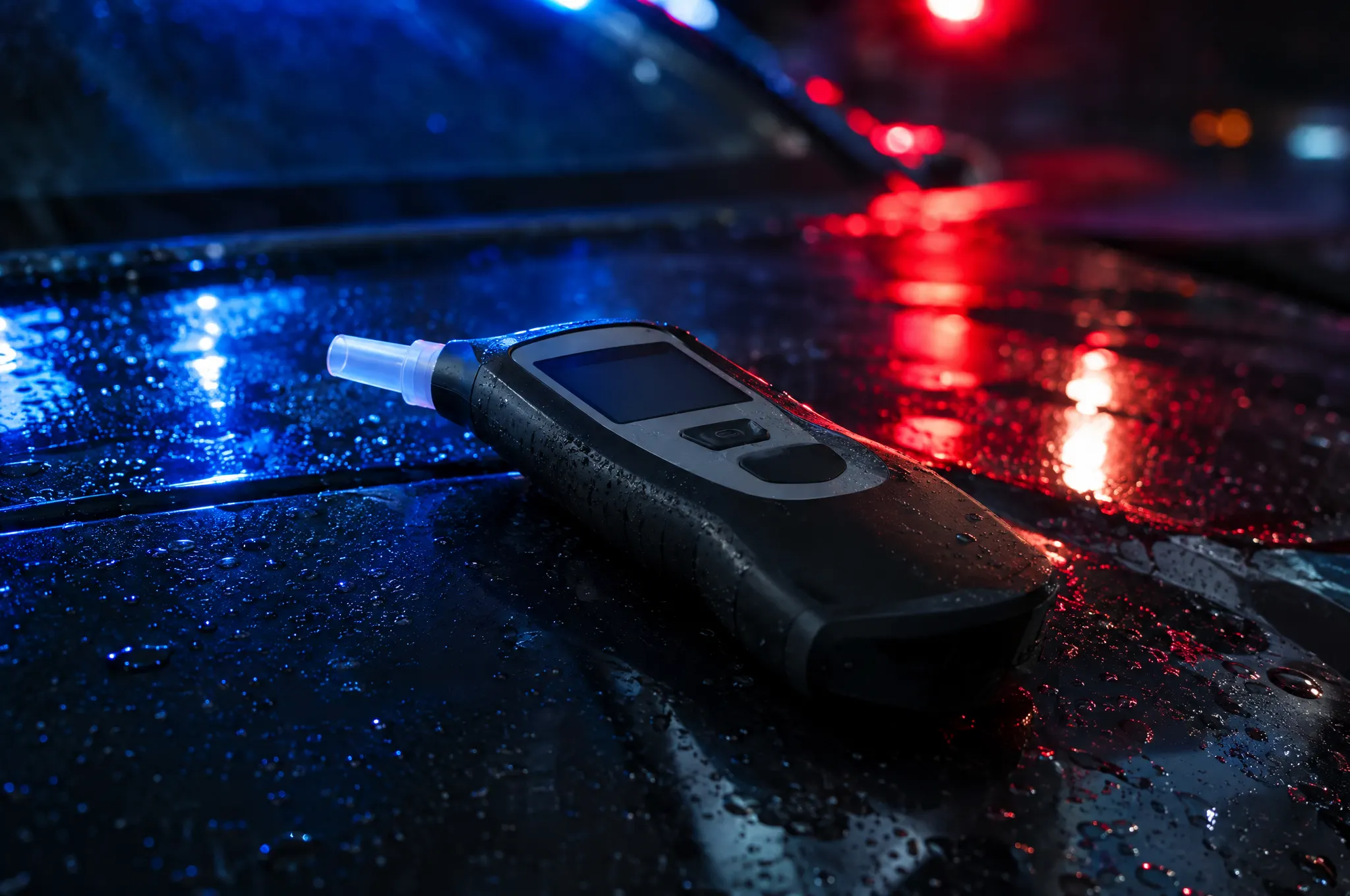
If the officer suspects alcohol, you'll likely be asked to step out and do roadside exercises, such as following a pen with your eyes or walking a line, and possibly to blow into a small handheld device. Those roadside exercises are voluntary in Colorado. The officer decides at this stage whether there's enough to arrest.
Roughly midnight: the arrest and the chemical test
After an arrest, Colorado's express consent law, C.R.S. 42-4-1301.1, comes into play. By driving in Colorado, you've agreed to take a breath or blood test when an officer has probable cause to believe you were driving under the influence, and the test generally has to happen within two hours of driving. For an alcohol case, you're usually offered a choice between breath and blood.
A breath test is typically done on a machine at a police station or jail, and the result is known right away. A blood test means a draw at a hospital or by a qualified technician, and the sample goes to a lab, so the result can take weeks. Refusing the test is allowed in the sense that no one will force a breath sample, but a refusal leads to its own license revocation through the DMV and can be mentioned in court. The charges themselves come from C.R.S. 42-4-1301, which covers both DUI and the lesser charge of DWAI (driving while ability impaired).
Your car doesn't come with you. Depending on the agency and where you were stopped, it may be towed and impounded or left parked. The arresting agency's paperwork or a phone call to them the next day will tell you where it is.
The early hours of Thanksgiving: booking
If you're taken to jail, booking means fingerprints, a photo, an inventory of your property and some basic questions. Colorado law gives people in custody the right to make a reasonable phone call to a lawyer or a family member after booking, so it's worth knowing at least one number by heart. This is not the time to explain yourself to jail staff or other people in custody. Phone calls from jail are usually recorded.
Some people are released from the station on a summons after the test, especially when blood results are still pending. Others stay in custody for several hours. Many jails won't release someone until they're sober enough to leave safely, and that timing varies from place to place.
Thanksgiving morning: bond and release
Release usually depends on bond. For many misdemeanor DUI arrests, bond is set from a schedule or by a judge, and it may be a personal recognizance bond (a signed promise to come back to court) or one that requires money posted. Someone with prior DUI convictions, or facing a charge that could be a felony, may wait longer and face stricter terms. Our page on how bond and release work in Colorado explains that side in more detail.
Bond comes with conditions, and they matter as much as the dollar amount. Common DUI conditions include no alcohol, and some people are ordered into alcohol monitoring while the case is open. Breaking a bond condition can get the bond revoked and lead to a new arrest. If you'll be at a family gathering later that day, the condition applies there too.
Later that day: the paperwork in your pocket
Once you're out, empty your pockets onto a table and read everything. You'll typically have some combination of a summons or bond paperwork listing the court, the date and time of your first appearance, a tow or impound notice, and, if you took a breath test with a result at or over the limit or the officer recorded a refusal, a notice of revocation from the officer. With a blood test, the revocation notice often comes by mail later, after the lab results are back.
The notice of revocation is the DMV side of the case, and it runs separately from the criminal charge. The officer may have taken your physical license. What you're allowed to drive, and for how long, depends on what that notice says and what you do next.
Thanksgiving weekend: what you can do while offices are closed
Courts are closed on Thanksgiving Day, and holiday schedules can slow down jails, tow lots and government offices for the rest of the weekend. That doesn't stop you from doing useful things. Write down everything you remember about the night while it's fresh: where you were, what and when you ate and drank, when you left, the route, what the officer said, what tests you were asked to do and the time of each. Keep every piece of paper together. Don't post about the arrest on social media, and don't discuss the details with friends or family over text.
This is also a good time to talk to a defense lawyer, because the DMV hearing request and the court case both start moving the moment the holiday ends.
The following week: the DMV hearing request
Requesting the hearing is the first real decision with a hard deadline. The notice explains how to make the request. A hearing gives you a chance to challenge the revocation, and a lawyer can look at whether the stop, the arrest and the test were handled the way Colorado law requires. The criminal case and the DMV case use different standards and different decision-makers, so the result in one doesn't automatically decide the other.
Weeks later: your first court date
Your first court appearance is set on your summons or bond paperwork, and it's often several weeks out. For a misdemeanor DUI in Denver, it's usually in county court, but the arresting agency and the location of the stop decide which court, so go by the name and address printed on your paperwork. Missing that date can lead to a warrant, so put it in your calendar now.
At or before that first appearance, the prosecution starts sharing evidence such as police reports, test results and video. That's when a defense lawyer can start testing the case in earnest. If you want to know more about how these cases are defended, our DUI defense page covers the charges, the DMV process and what comes after the first appearance.
Will Frankfurt has defended criminal cases in Colorado for 28 years, and most of his practice is DUI defense. Consultations are free, and calls and texts are answered 24/7, holidays included, at (720) 371-3101.

Charged with a crime in Colorado? Make the first call count.
Tell Will what happened and read him the paperwork. The consultation is free, by phone or in person, and he usually calls back within about 10 minutes.
(720) 371-3101Meetings by appointment, in person or by phone